

In any water treatment system, control valves play a vital role — regulating flow direction, backwashing cycles, regeneration, and overall system performance. Today, the market offers two main types of valves: manual valves and automatic valves. Each has distinct advantages and limitations depending on your system size, operation model, and level of automation.
So which one fits your needs best? Let’s explore the differences with Aquatechvina Innovation — a pioneer in modern water treatment technology.
Manual Valves – Traditional Control, Human Precision
How They Work
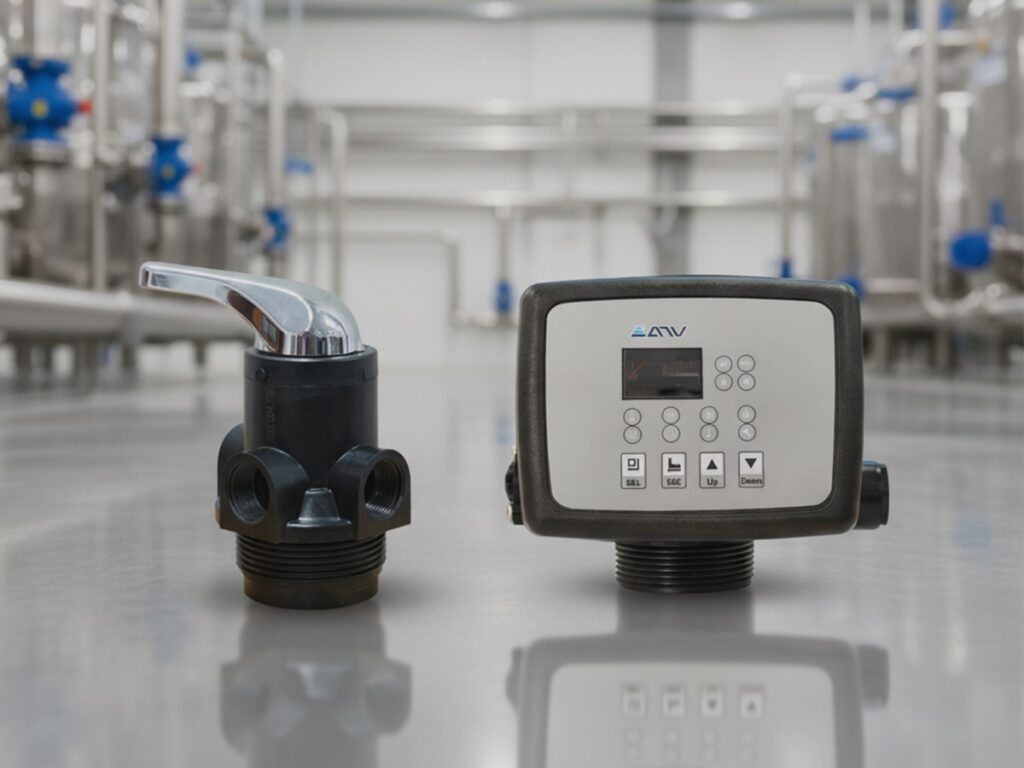
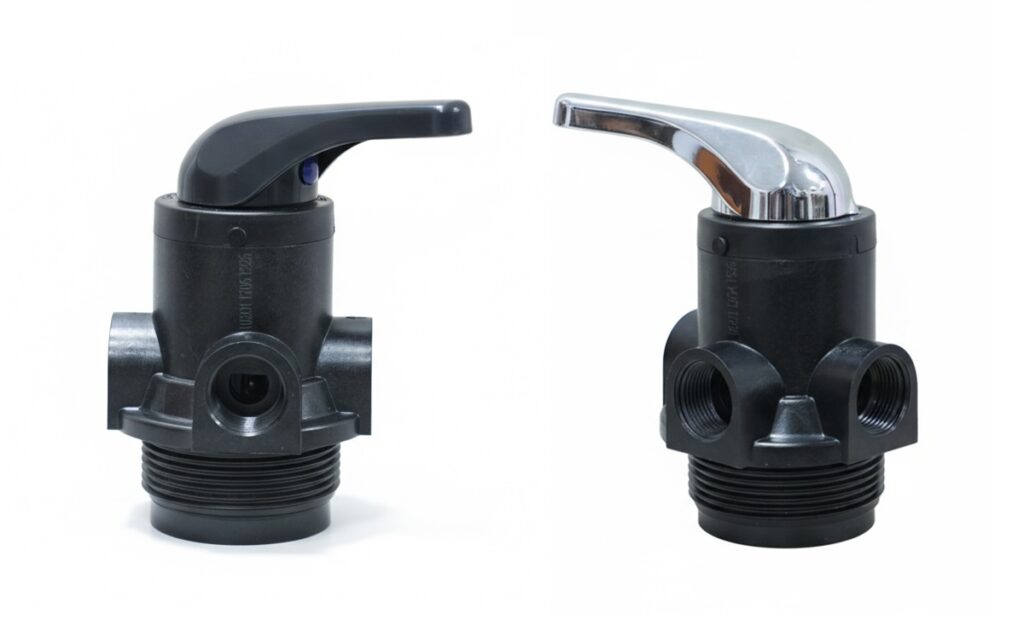
Manual valves operate through direct user control. The operator must manually turn a handle or lever to switch between modes such as filtration, backwash, rinse, or regeneration.
Key Features
- Simple design, easy to maintain.
- Made from high-strength engineering plastic with tight-seal gaskets to prevent leaks.
- Ideal for residential systems, RO pre-filters, or small boilers.
Advantages
- Low investment cost.
- Easy to operate and replace.
- No power supply or programming required.
Limitations
- Fully dependent on human operation, prone to errors if timing or steps are missed.
- No warning or auto-shutdown features, making long-term control less reliable.
- Not suitable for large-scale or 24/7 continuous systems.
Automatic Valves – Smart Control for Modern Systems
How They Work
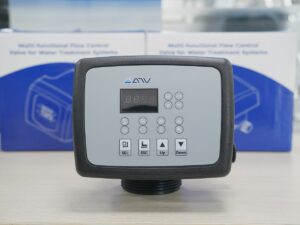
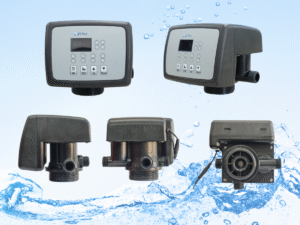
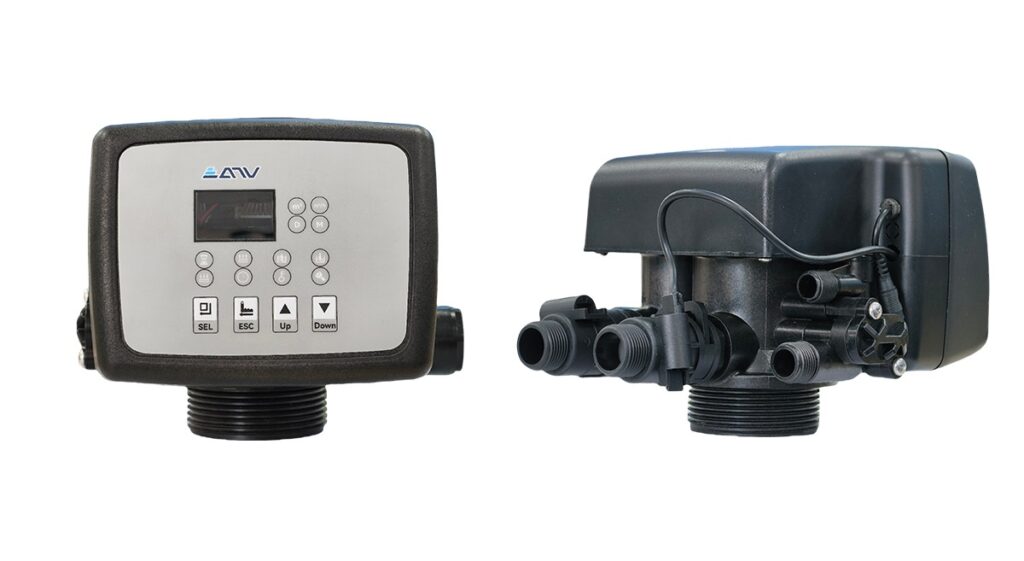
Automatic valves are equipped with microprocessor controllers that automate the entire filtration and regeneration process based on time or flow volume. The ATV automatic valve series, officially distributed by Aquatechvina Innovation, represents the new generation of intelligent water treatment control technology.
Key Features
- Automatic regeneration based on time or flow rate.
- Maintenance alerts, data storage, and auto-shutoff when filter media replacement is due.
- Interlock connectivity – enabling multi-valve synchronization for industrial-scale systems.
- Four smart regeneration modes (A01–A04) for flexible control.
Advantages
- Fully automated process – reduces manual labor and human error.
- Stable system performance, ideal for continuous operation.
- Accurate monitoring and reporting of backwash cycles.
- Extends media lifespan and reduces salt and water consumption during regeneration.
Limitations
- Higher upfront investment than manual valves.
- Requires a stable power source and basic setup knowledge for installation and operation.
Which Valve Should You Choose?
If your system is small, simple, and cost-sensitive — such as a home, cafe, or mini RO setup — a manual valve is a perfectly reasonable choice. However, for industrial facilities, hotels, residential complexes, or hospitals where continuous and reliable operation is essential, automatic valves are the industry standard. They help you:
- Reduce manual labor costs.
- Ensure consistent performance.
- And maintain optimal water quality output at all times.
Aquatechvina Innovation – Vietnam’s Leader in Water Automation Technology
As the official distributor of ATV — a global manufacturer of water treatment products, Aquatechvina Innovation proudly delivers a complete range of next-generation automatic valves, supported by an expert technical team providing:
- Professional consultation on valve selection and system design.
- Installation and operation guidance.
- Authorized maintenance and genuine spare parts.
At Aquatechvina, we believe that automation is not just a trend — it is the inevitable transformation of Vietnam’s water treatment industry, helping businesses optimize operations, save resources, and move toward a sustainable future.
Aquatechvina Innovation – Advancing Vietnam’s Water Technology through Smart Automation Solutions
- 📞 Hotline: +84 971 503 562
- 📧 Email: contact@aquatechvina.com
- 🌐 Website: www.aquatechvina.com